

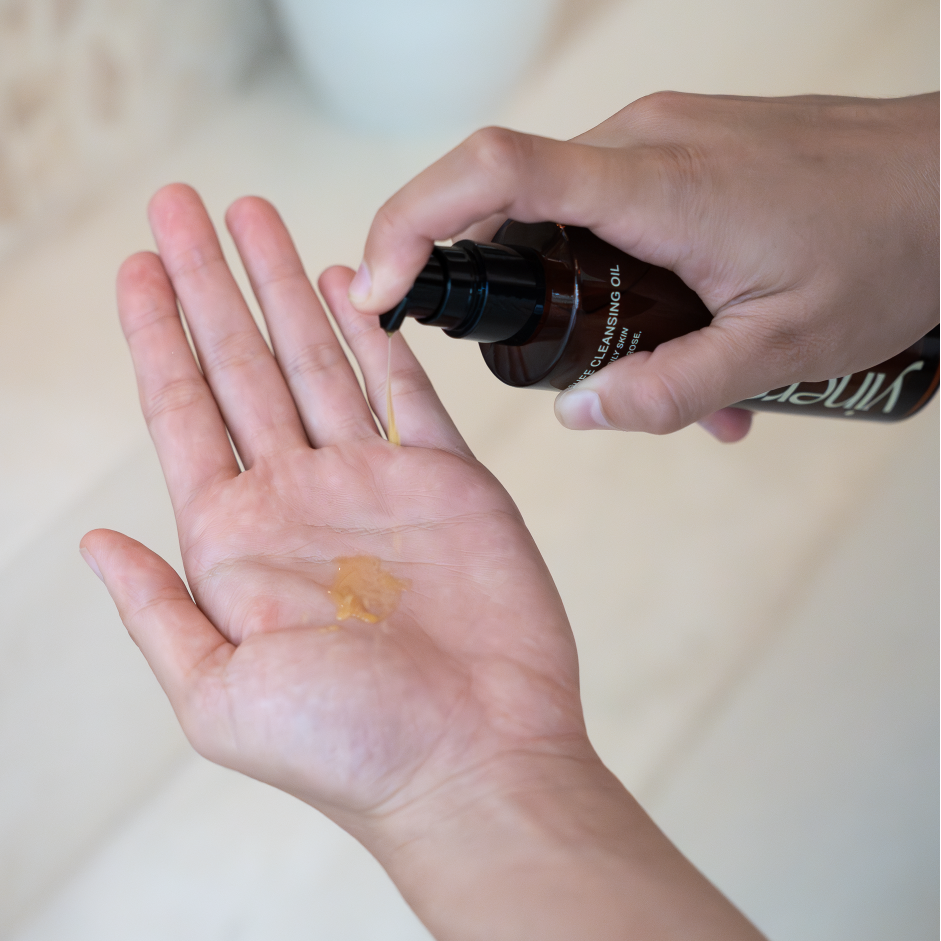
Why Oils Alone Don’t Hydrate the Skin
Oils are often described as “hydrating” in skincare, but technically, this is not accurate.
Oils can soften the skin, reduce water loss, support the skin barrier and create a protective layer over the surface. But oils do not contain water, and therefore they cannot directly hydrate the skin.
This distinction matters, especially if your skin feels dry, tight, flaky, sensitive, dull or dehydrated even though you are using facial oils, balms or tallow skincare.
At Yinera, we formulate with this difference in mind. The skin needs both water-based hydration and barrier-supportive lipids. That is why we create emulsified tallow skincare that brings water and oils together in one balanced formula.
Hydration vs Moisturising: What Is the Difference?
In skincare, hydration and moisturising are often used as if they mean the same thing. They do not.
Hydration means adding water to the skin
Hydration refers to the water content within the skin, especially within the outermost layer called the stratum corneum. When the skin is well hydrated, it usually looks plumper, smoother, calmer and more radiant.
Moisturising means reducing water loss and softening the skin
Moisturising usually refers to ingredients that soften, smooth and protect the skin. Oils, butters, waxes and tallow are moisturising because they help reduce moisture loss and support the skin’s lipid barrier.
But moisturising ingredients are not automatically hydrating. They help hold water in, but they do not provide water by themselves.
Why the Skin Needs Water
The outer layer of your skin is made up of corneocytes, often described as “bricks”, surrounded by lipids, often described as “mortar”. This brick-and-mortar structure helps keep the skin strong, flexible and protected.
For this layer to function well, it needs enough water.

Water in the stratum corneum helps support:
- Skin softness and flexibility
- A smoother skin texture
- Healthy enzyme activity involved in natural exfoliation
- Reduced tightness and flaking
- A stronger, more comfortable skin barrier
- Better tolerance to skincare products
When the skin does not have enough water, it can feel rough, tight, itchy, dull or reactive. This is dehydration, and it can happen in all skin types — including oily and acne-prone skin.
What Happens When the Skin Is Dehydrated?
Dehydrated skin is lacking water, not necessarily oil.
This is why some people can have skin that feels greasy on the surface but tight underneath. The skin may produce oil, but still lack water within the upper layers of the barrier.
Signs of dehydrated skin may include:
- Tightness after cleansing
- Fine crepey lines
- Dullness
- Flaking
- Redness or sensitivity
- Makeup sitting poorly
- Skin that feels oily but still uncomfortable
If you only apply oils to dehydrated skin, the skin may feel softer temporarily, but the deeper feeling of tightness can remain because water has not been replenished.
Why Oils Alone Cannot Hydrate the Skin
Oils are made of lipids. They do not contain water. This means they cannot directly increase water content in the skin.
Instead, oils sit within or over the surface layers of the skin and help slow down transepidermal water loss, also known as TEWL. TEWL is the natural process of water evaporating from the skin into the environment.
This is helpful, but it is only one part of skin hydration.
Think of it this way: oil can help seal water in, but it cannot supply the water in the first place.
The Skin Needs Humectants Too
Humectants are ingredients that attract and bind water. They help draw moisture into the outer layers of the skin and keep it there.
Common humectants include:
- Glycerin
- Aloe vera
- Panthenol
- Urea
- Amino acids
- Tremella mushroom polysaccharides
- Hyaluronic acid
This is why a well-rounded skincare routine usually needs more than oil. It needs water, humectants and barrier-supportive lipids working together.
At Yinera, our Botanical Mist and Barrier Repair Serum help deliver water-based hydration before moisturising.
Where Oils and Tallow Still Matter
Oils are not useless. They are incredibly important — they are just often misunderstood.
Oils, butters and tallow help support the lipid side of the skin barrier. They can soften rough skin, reduce water loss and protect the surface from dryness and environmental stress.
Tallow is especially valued in natural skincare because it contains fatty acids such as stearic, palmitic and oleic acid, which help nourish and soften the skin.
But even nutrient-rich oils and fats work best when the skin has enough water underneath.
Why Yinera Makes Emulsified Tallow Skincare
Traditional tallow balms are oil-based. They can be beautiful for sealing and protecting the skin, but they do not provide water-based hydration on their own.
This is why Yinera also creates emulsified tallow skincare. An emulsion combines water and oil into one cream, allowing the formula to deliver hydration and lipid nourishment together.
In products like Qi Creme and Jing Creme, water-based ingredients work alongside grass-fed tallow, botanical extracts and skin-supportive oils to create a more complete moisturising experience.
This is not about saying balms are bad. Balms have their place. But if your skin is dehydrated, tight or barrier-damaged, an emulsion can often feel more comfortable because it provides both water and oil phases in one product.
Why Your Skin May Still Feel Dry After Oils
If your skin still feels dry after using oils, balms or facial oils, it may be because your skin is missing water, not fat.
You may need to add water-based hydration before sealing everything in.
A simple hydration-focused routine could look like this:
- Cleanse gently without stripping the skin.
- Apply Botanical Mist to dampen and hydrate the skin.
- Use Barrier Repair Serum to support the skin barrier.
- Seal with Qi Creme, Jing Creme or a balm if your skin needs extra protection.
Oils Seal. Water Hydrates. The Skin Needs Both.
The skin is not simply dry because it lacks oil. It can also be dehydrated because it lacks water, humectants and a healthy barrier structure.
Oils, balms and tallow can help protect the skin and reduce water loss, but they cannot replace water-based hydration.
For skin that feels truly comfortable, soft and resilient, the goal is not oil instead of water — it is water and oil working together.
That is the philosophy behind Yinera: hydration first, barrier support second, and lipid nourishment to seal everything in.
FAQs About Oils, Hydration and Skin Barrier Repair
Do oils hydrate the skin?
No. Oils do not hydrate the skin because they do not contain water. They moisturise, soften and help reduce water loss, but hydration comes from water-based ingredients and humectants.
Why does my skin still feel dry after using facial oil?
Your skin may be dehydrated rather than simply dry. This means it needs water-based hydration, not just oil. Applying a mist or serum before oil can help improve comfort and hydration.
What is the difference between dry skin and dehydrated skin?
Dry skin usually lacks oil, while dehydrated skin lacks water. You can have oily skin that is dehydrated, or dry skin that is both oil-deficient and water-deficient.
Can tallow hydrate the skin?
Tallow can moisturise and nourish the skin, but pure tallow does not hydrate because it does not contain water. Emulsified tallow creams combine water and tallow, making them more suitable for skin that needs both hydration and lipid support.
What ingredients actually hydrate the skin?
Water-based ingredients and humectants hydrate the skin. These include glycerin, aloe vera, panthenol, urea, amino acids, Tremella mushroom polysaccharides and hyaluronic acid.
Should I apply oil to damp skin?
Yes. Applying oil or balm over damp skin can help seal in water. This is more effective than applying oil to completely dry skin, especially if your skin feels tight or dehydrated.
Are emulsions better than oils for dehydrated skin?
For dehydrated skin, emulsions are often more helpful than oils alone because they contain both water and oil phases. This allows them to hydrate and moisturise at the same time.
What is emulsified tallow skincare?
Emulsified tallow skincare combines water-based ingredients with tallow and oils to create a cream. This gives the skin hydration from the water phase and nourishment from the lipid phase.
What Yinera products help with dehydrated skin?
For dehydrated skin, Yinera recommends layering Botanical Mist, Barrier Repair Serum and an emulsified tallow moisturiser such as Qi Creme or Jing Creme.
- Skin hydration: a review on its molecular mechanisms (PMID: 17524122)
- Dry skin, moisturization and corneodesmolysis (PMID: 18503460)
- Skin Barrier Function – Elias PM (PMC Article)
- Moisturization and skin barrier function (PMID: 14728698)
- The Skin Barrier and Moisturization: Function, Disruption, and Repair (PMID: 37717558)
Read more
Is tallow clogging your pores? Learn the truth about tallow skincare, barrier repair, and why formulation makes all the difference.
Not all tallow skincare feels the same. While traditional tallow balms can work well for some people, others find them too heavy or occlusive. Learn why Yinera created emulsified tallow creams desi...
Leave a comment
This site is protected by hCaptcha and the hCaptcha Privacy Policy and Terms of Service apply.